Bihar Election Fraud Allegations: Six Pieces of Evidence Detail Systemic Irregularities
An independent analysis of the recent Bihar elections presents six detailed pieces of evidence, including cash transfers, duplicate votes, and EC policy changes, alleging systemic electoral fraud.
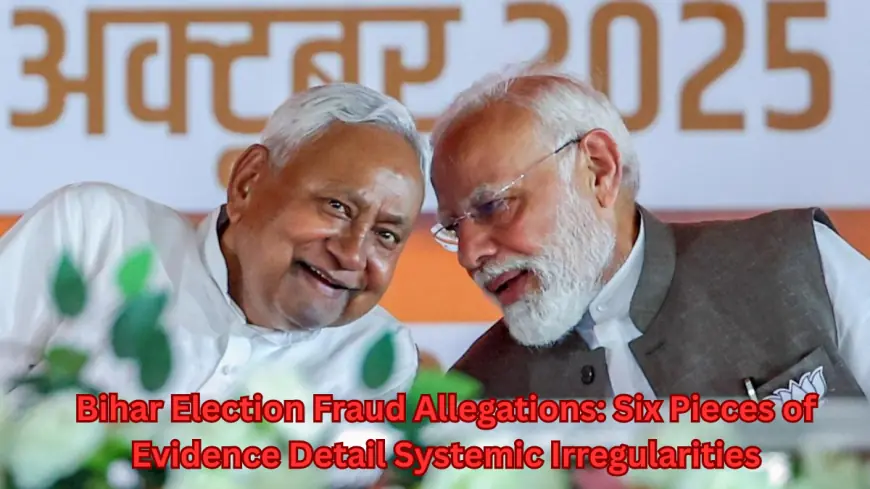
Mounting Concerns Over Bihar Poll Integrity: Six Pieces of Evidence Allege Systemic Fraud
Patna, December 1, 2025 – The conclusion of the recent Bihar Assembly Elections, which resulted in a victory for the National Democratic Alliance (NDA), has been met with significant and detailed allegations of electoral malpractice. While mainstream media narratives often dismiss such claims as "sour grapes" from the losing side, an independent analysis, citing six core pieces of evidence, suggests that deep-seated irregularities and systemic bias may have influenced the final result.
This non-partisan investigation calls on the Election Commission of India (ECI) and the central government to officially address the presented proofs, which point to a disturbing pattern of potential vote rigging and the erosion of fair electoral processes.
1. Legalized Bribery: Cash Transfers and MCC Violation
A primary allegation concerns the timing and nature of a massive cash transfer scheme. Days before the first and second phases of polling (October 31 and November 7), a ₹10,000 transfer was deposited into the bank accounts of 12.5 million women under the guise of a business starter for Jeevika Self-Help Groups.
-
Model Code of Conduct (MCC) Breach: The MCC, which prohibits new cash handouts to influence voters, was in effect since October 6. Critics argue that making substantial payments on October 17, 24, 31, and November 7 constituted a clear violation, particularly given past ECI precedents where similar state welfare payments were halted during election periods (e.g., in Tamil Nadu, Andhra Pradesh, and Telangana).
-
Politicization of Poll Duty: Furthermore, over 180,000 members of the cash-receiving Jeevika Self-Help Groups (Jeevika Didis) were reportedly placed on election duty, creating a direct link between a state-sponsored financial incentive and personnel working within polling booths. This unprecedented overlap is viewed as a significant conflict of interest, potentially compromising the neutrality of the voting environment.
2. Proliferation of Duplicate and Multi-State Voters
The integrity of the electoral roll has been fiercely questioned following reports of multiple and duplicate registrations.
-
Publicly Documented Instances: Instances of individuals, including a reported BJP worker, casting votes in multiple states like Delhi, Haryana, and Bihar, have been openly documented on social media and by independent news outlets. These cases point to a failure to enforce rules prohibiting citizens from holding multiple Electoral Photo Identity Card (EPIC) numbers.
-
Failure of the Special Intensive Revision (SIR): Investigative reports by groups like the Reporters' Collective suggest the final voter list contained over 1.4 million suspect duplicates, with 342,000 having exact match details. Concerns center on the ECI's alleged suspension of its own automated software for clearing duplicates and the aggressive use of the Special Intensive Revision (SIR) process, which critics claim failed to remove genuine duplicates while simultaneously targeting opposition voter bases (see point 5).
3. Organized Transport of Out-of-State Voters
The movement of non-local voters into Bihar just before the polls has been highlighted as a clear example of a corrupt electoral practice.
-
Special Trains from Haryana: Reports by media houses, including ABP News, detailed the deployment of special trains from Haryana to Bihar on November 3, allegedly filled with voters for the second phase of the Bihar elections. Passengers reportedly confirmed that the trips, including food and travel, were paid for by the ruling party.
-
Violation of RP Act, 1951: This practice is cited as a direct violation of Section 123(5) of the Representation of the People Act, 1951, which explicitly bans candidates from providing free transport to voters to influence their attendance at polling stations. The ECI’s failure to act on these documented incidents, despite public outcry from opposition figures like Kapil Sibal and Rahul Gandhi, raises serious accountability questions.
4. Retroactive Changes to CCTV Footage Rules
In a move described as a blow to election transparency, the ECI revised rules pertaining to the preservation and accessibility of crucial poll-day footage.
-
Overturning Judicial Mandate: Following a December 2024 Punjab-Haryana High Court ruling that classified CCTV footage as an 'election paper' and mandated its provision to parties, the Modi government swiftly amended Rule 93(2)(a) of the Conduct of Elections Rules, 1961, removing electronic records from the list of public inspection papers.
-
The 45-Day Deletion Policy: This was compounded by a June 2025 ECI directive introducing a 45-day deletion policy for all CCTV, webcasting, and photography data following the result declaration, unless an election petition is filed. Critics argue that this policy, justified by the ECI on grounds of 'misuse' and storage capacity, effectively eliminates vital evidence—such as proxy voting or booth manipulation—just as the complex process of filing an election petition begins.
5. Disproportionate Voter Deletion via SIR
The Special Intensive Revision (SIR) process ahead of the polls drastically reduced the voter list from 78.9 million to 74.2 million, a net reduction of 4.7 million.
-
Targeting Opposition Strongholds: Data analysis indicates that the deletion was disproportionately high in areas considered opposition strongholds. The Seemanchal region, a minority-dominated area, saw a 7.7% cut in the voter list, significantly higher than the 5.9% state average.
-
Targeting Demographic Groups: Evidence from activist groups alleges that Muslims, who constitute 16.9% of Bihar’s population, accounted for a massive 33% of the total names deleted from the final electoral roll. Similar reports of disproportionate deletion were cited for Dalit and tribal voters, prompting serious concerns about intentional disenfranchisement.
6. Systemic Bias and Lack of ECI Accountability
A final, overarching concern centers on the perceived lack of neutrality and accountability within the Election Commission itself.
-
Enforcement Bias: Critics highlight a perceived double standard in the enforcement of the MCC. While opposition parties face swift action for minor infractions, high-profile figures from the ruling party, including the Prime Minister, have allegedly violated the MCC with impunity, particularly concerning communal remarks during the 2024 Lok Sabha elections.
-
Changes to the Appointment Process: The controversial 2023 amendment that replaced the Chief Justice of India with a Union Cabinet Minister on the ECI selection committee is seen as fundamentally compromising the institution's independence, giving the executive two of the three votes in the appointment process. The subsequent appointment of Election Commissioners and the alleged proximity of family members to key administrative posts in poll-bound areas have only intensified these suspicions.
-
Legal Immunity: Further complicating accountability is the 2023 amendment granting broad legal immunity to EC officials for their official acts, effectively shielding them from judicial scrutiny and further solidifying the perception of a body insulated from public challenge.
Call for Action
The accumulation of these six points of evidence—from suspicious cash transfers and the movement of out-of-state voters to the disenfranchisement of targeted demographics and the strategic deletion of video evidence—represents a fundamental challenge to the integrity of the Bihar election results. With the opposition calling for a unified response and courts slow to act, citizens are being urged to raise their voices to demand a full, transparent, and independent investigation into the processes that underpinned the 2025 Bihar polls.