Blood Cancer Crisis: DKMS Urges Indians to Register as Stem Cell Donors to Save 150 Lives After Recent Successes
With 70,000 blood cancer deaths yearly in India, the DKMS registry calls for 3 lakh new stem cell donors. The simple process is free, critical, and has already saved 15 lives.
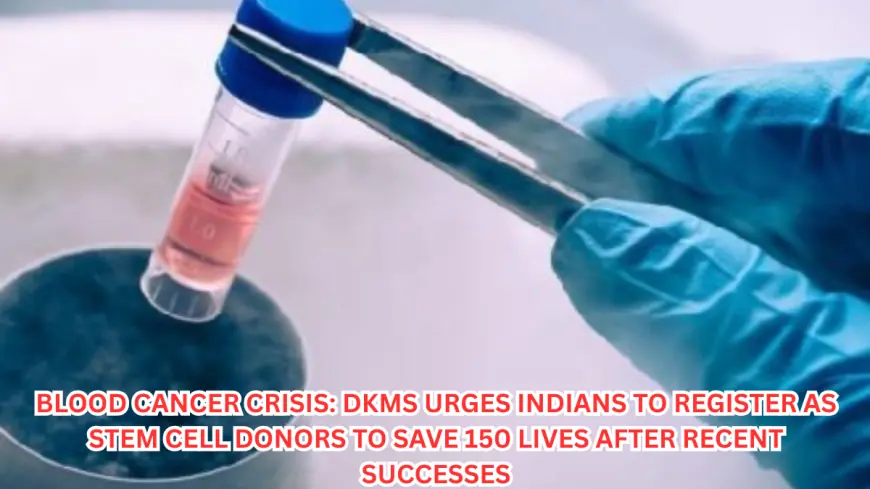
A Race Against Time: Stem Cell Registry Seeks 3 Lakh New Donors to Combat Blood Cancer
Dresden, Germany / Mumbai, India, December 1, 2025 – The global fight against blood cancer has intensified, with the international non-profit organization DKMS (Deutsche Knochenmarkspenderdatei) launching a major appeal to register three lakh new potential blood stem cell donors in India. This ambitious goal follows the organization's recent success in saving 15 lives through successful donations facilitated by its registry.
Blood cancer, including leukemia, remains a devastating diagnosis, claiming over 70,000 lives annually in India. For patients whose conditions do not respond to chemotherapy, a stem cell transplant is often the last, best hope for survival.
The Challenge of Finding a Match
Unlike conventional blood donation, which requires matching one of eight common blood types, stem cell donation requires a match of the Human Leukocyte Antigen (HLA) type. With over 20,000 known HLA markers, the probability of finding a match outside one's immediate family is exceptionally low—around one in 100,000.
"The sheer rarity of a suitable match means that relying solely on close relatives is often insufficient," explained a DKMS representative. "India currently has low registration rates relative to its population, making every new registration critical to boosting a patient's chance of survival."
Heartwarming stories, such as Mumbai resident Saili Rane finding a matching donor through DKMS from Visakhapatnam, and six-year-old Maheer from Ahmedabad finding a match in Germany, demonstrate the global reach and necessity of the registry.
The Simple, Free Path to Becoming a Lifesaver
DKMS has stressed that becoming a registered potential donor is free of cost and easy:
-
Online Registration: Prospective donors (aged 18-55, in good health, and with a BMI under 40) fill out a form on the DKMS website.
-
Swab Kit: A do-it-yourself cheek swab kit is delivered to the donor's home.
-
Submission: The swab is performed, packed with the signed consent form, and collected by the organization.
-
HLA Typing: The sample is processed in high-tech labs, such as the DKMS Life Science Lab in Dresden
, where advanced machines extract DNA, multiply the relevant HLA sections, and add the profile to the worldwide database.
The Donation Process
If a patient matches the donor's HLA type, DKMS contacts the donor. Over 90% of donations are collected via the Peripheral Blood Stem Cell (PBSC) method, a non-surgical procedure similar to platelet donation:
-
PBSC (Aphaeresis): The donor receives daily injections of a growth factor (G-CSF) for five days to mobilize stem cells from the bone marrow into the circulating bloodstream.
-
Collection: Blood is drawn from one arm, circulated through an apheresis machine that separates the stem cells, and the remaining blood is returned to the body through the other arm.
-
Recovery: The process takes only 2–3 hours, is minimally painful (a needle prick), and the body naturally regenerates the donated cells within a few weeks. DKMS covers all travel and accommodation costs for the donor.
The organization is calling on all eligible citizens to "make the small effort that results in a profound impact," urging the public to achieve this year's target of saving 150 lives.
You can learn more about the simple process to register as a stem cell donor by watching