
Beyond the KBC Kid: Social Commentary Fuels Debate on 'Six-Pocket Syndrome,' Screen Time, and the Crisis of Modern Indian Parenting
The viral KBC clip of a "rude" 10-year-old sparks a national conversation. Experts analyze the rise of arrogance, "Six-Pocket Syndrome," and the failure to set boundaries.
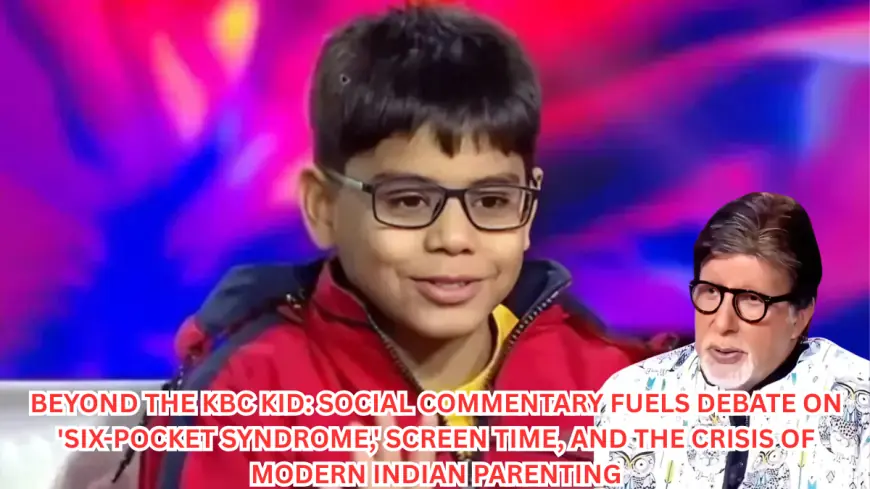
Viral KBC Moment Ignites Debate Over India’s ‘Rude’ New Generation
The recent viral segment from the television show Kaun Banega Crorepati (KBC), featuring a 10-year-old contestant whose dismissive tone towards host Amitabh Bachchan was widely criticized as "arrogance" and "disrespectful," has escalated into a national debate about the behavioral standards of today’s children.
While it is common for older generations to complain about the youth—a phenomenon known as the "Kids These Days" effect—the conversation has moved beyond simple generational bias to focus on specific, modern parenting trends that may be exacerbating poor behavior.
The New Challenges: Entitlement and Isolation
The video analysis highlights several key societal and psychological shifts contributing to the problem:
-
The Six-Pocket Syndrome: This trend, increasingly seen in urban India, describes a single child receiving excessive attention and resources from six adults (two parents and four grandparents). This over-attention creates a profound sense of entitlement, where the child feels the world revolves around them and expects every demand to be met immediately.
-
Parental Over-Evaluation: Continuously labeling a child as "extraordinary" or "special" beyond reasonable praise can foster narcissistic tendencies and an attitude that their talent excuses rudeness.
-
Social Isolation: The shift towards nuclear families and the long periods of social isolation during the COVID-19 pandemic have severely affected children's development. Limited interaction with peers and elders outside the immediate family has restricted the opportunities for children to learn essential social skills and discipline.
Why Corporal Punishment Fails
A core part of the discussion addresses the reaction of many viewers who advocated for corporal punishment ("slapping" or "using a belt") to correct the child's behavior. The analysis strongly refutes this approach, explaining its dangers:
-
It Fosters Fear, Not Respect: Corporal punishment forces compliance through fear, but it does not teach the child why the behavior is wrong. Once the fear of getting caught or being hit subsides, the negative behavior often returns.
-
It Normalizes Aggression: Hitting or threatening children teaches them that violence is a legitimate way to exercise power and control over others, modeling the exact aggression parents are trying to eliminate.
The Path to Balance: Authoritative Parenting
The recommended solution is a move towards Authoritative Parenting, which strikes a balance between being demanding and being responsive:
-
Warmth and Rules: This style involves showing love and warmth to the child while simultaneously setting clear, consistent boundaries and rules.
-
Explain Consequences: Instead of imposing punishment, parents must use logic and explanation to help the child understand the negative consequences of their actions.
-
Model Behavior: The most effective teaching tool is for parents to consistently model the good behavior they wish to see—whether it is not littering or behaving with humility towards others.